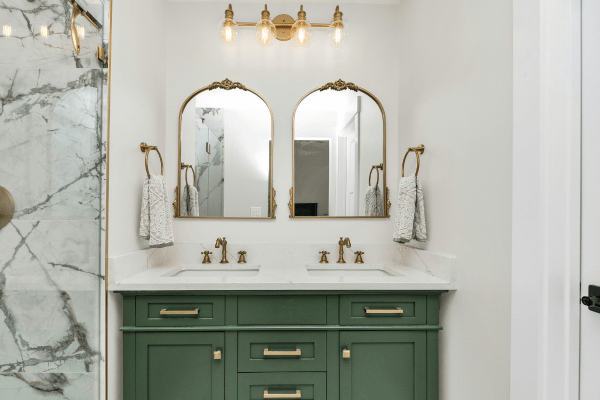
The best bathroom remodel ideas improve how the room works before they change how it looks. A successful update may be as focused as replacing the vanity and lighting or as extensive as rebuilding the shower, changing the tile, and improving ventilation. The right scope depends on your layout, the condition of the room, and the problems you want the remodel to solve.
This updated guide organizes 15 ideas by purpose, cost, and installation difficulty. It also explains where each idea works best so you can build a bathroom remodeling plan rather than collect disconnected inspiration.
Before You Remodel: Set Priorities, Budget, and Scope
Before choosing tile or hardware, identify what is failing in the current bathroom. Water damage, poor drainage, inadequate ventilation, unsafe wiring, and deteriorated plumbing should take priority over cosmetic upgrades. Keeping fixtures in their existing locations generally limits plumbing work, while moving a toilet, shower, or tub can increase both cost and project time.
| Project level | Typical work | Best for | Budget impact |
|---|---|---|---|
| Cosmetic refresh | Paint, mirror, lighting, hardware, accessories | A functional room that looks dated | Lower |
| Partial remodel | Vanity, toilet, fixtures, flooring, shower door | Improving comfort without changing the layout | Moderate |
| Full remodel | Layout, plumbing, electrical, waterproofing, all finishes | Damaged, inefficient, or poorly planned bathrooms | Higher |
Cost ranges vary substantially by location, room size, product selection, demolition, permits, and labor. Obtain itemized local quotes before setting a final budget.
1. Use a Light, Minimal Bathroom Design

A light color palette can make a small bathroom feel calmer and more open. White, warm white, pale gray, and soft greige reflect light and create a flexible background for wood, stone, black, chrome, or brass accents. Minimalism works best when storage is planned well; otherwise everyday toiletries quickly become visual clutter.
2. Add a Bathroom Accent Wall
An accent wall gives the room a focal point without requiring expensive material on every surface. The wall behind a vanity, freestanding tub, or the far end of a shower is usually the strongest location. Suitable materials include patterned tile, a stone-look slab, fluted moisture-resistant panels, or bathroom-rated wallpaper outside direct splash zones.
- Use water-resistant materials inside showers and wet zones.
- Keep surrounding surfaces quieter so the focal wall remains intentional.
- Repeat one color or finish elsewhere in the room to connect the design.

3. Replace the Bathroom Vanity
The vanity affects storage, circulation, sink placement, counter space, and the visual balance of the room. A wall-mounted model can expose more floor and create a lighter look, while a freestanding vanity often provides a familiar furniture-style appearance. Double-sink designs help shared bathrooms when there is enough width; a well-planned single sink can provide more usable counter space in a smaller room.
Measure the available wall, door swing, plumbing centerline, and walking clearance before buying. Use the bathroom vanity size guide to compare common widths, and review the complete steps for replacing a bathroom vanity before deciding whether the project is suitable for DIY work.

Bathroom Vanities to Try!

Vinnova Porto 36-Inch Bathroom Vanity
A freestanding single vanity with a quartz top and warm aged-natural-oak finish.
View at KB Authority
OVE Decors Gabi 42-Inch Bathroom Vanity
A dark-walnut freestanding vanity with a single sink and engineered-marble countertop.
View at KB Authority4. Upgrade the Mirror or Medicine Cabinet
A properly sized mirror improves both grooming and the sense of space. A framed mirror introduces a decorative finish, a frameless mirror keeps the look quiet, and a lighted mirror can add even illumination at face level. A mirrored medicine cabinet combines reflection with concealed storage and is especially useful when the vanity has limited drawers.
- Center the mirror over the sink or vanity rather than the entire wall.
- Check faucet and backsplash height before choosing the mirror size.
- For task lighting, position sconces near face height or use an evenly illuminated mirror.

Bathroom Mirror to Try!

Kohler Essential 22 × 60-Inch Oval Mirror
A tall oval wall mirror with a Moderne Brushed Gold finish and flexible mounting orientation.
View at KB Authority5. Refresh the Walls With Bathroom-Appropriate Paint
Paint is one of the least disruptive bathroom remodel ideas, but preparation determines the result. Repair peeling areas, address the source of excess humidity, clean the surface, and use a coating suitable for high-moisture rooms. Lighter colors tend to broaden a compact room; deeper colors can work well in a powder room or on a controlled accent wall.
6. Add Storage Without Crowding the Floor
Storage should place frequently used items near the point of use. Recessed niches organize shower products, shallow medicine cabinets handle smaller grooming items, and wall cabinets or floating shelves use vertical space. In a small bathroom, consider a narrow vanity, over-toilet cabinet, recessed medicine cabinet, or tall linen tower.
See these space-saving bathroom vanity ideas for layouts where every inch matters. Open shelves work best for a few attractive items; closed storage is usually better for visual calm and easier cleaning.

Bathroom Shelves We Recommend

OVE Decors Bella Corner Shelves
A three-piece set of tempered-glass corner shelves for keeping smaller bathroom items accessible.
View at KB Authority7. Create Layered Bathroom Lighting
A single ceiling fixture rarely handles every task. A better plan combines ambient lighting for general visibility, task lighting around the mirror, and accent lighting for niches or architectural features. Choose fixtures rated for their installation location, especially near tubs and showers, and have electrical work completed according to local requirements.
Explore bathroom lighting after determining the fixture locations, required brightness, color temperature, and damp- or wet-location rating.

Damp-Rated Pendant to Try!

Kohler Occasion Ceiling-Mounted Pendant
A decorative pendant listed for damp locations; suitability still depends on its exact bathroom placement and local requirements.
View at KB Authority8. Coordinate Faucets, Shower Trim, and Hardware
Replacing faucets, shower trim, towel bars, and cabinet pulls can make an older bathroom feel more consistent. The finishes do not have to match perfectly, but they should look intentional. If mixing metals, use one dominant finish and repeat the secondary finish at least twice.
Before purchasing shower trim, identify the existing rough-in valve. Visible trim from one collection is not automatically compatible with a valve from another brand or system. For a broader refresh, compare bathroom faucets, shower systems, and matching bathroom accessories.

Bathroom Faucet to Try!

Kohler Parallel Single-Hole Bathroom Faucet
A polished-chrome bathroom faucet for single-hole deck-mounted installations.
View at KB Authority9. Use Large-Format or Easy-Care Bathroom Tile
Large-format tile can reduce the number of grout joints and create a more continuous surface. It does not automatically make installation easier: walls and floors must be sufficiently flat, cuts can be demanding, and shower floors still need appropriate drainage and slip resistance. Smaller mosaics often conform more easily to a sloped shower floor.
- Prioritize slip resistance for floors, especially in wet areas.
- Confirm the material and setting system are approved for the intended location.
- Choose a grout color based on maintenance as well as appearance.
- Plan niches, edges, and transitions before tile installation begins.

Glue-Up Wall Tile to Try!
DreamLine Epiphany Glue-Up Wall Tiles
A grout-free wall-panel option for approved interior applications; confirm surface preparation and wet-area suitability before installation.
View at KB Authority10. Add a Heated Towel Rack
A heated towel rack is a comfort upgrade that also helps damp towels dry more quickly. Wall-mounted electric models conserve floor space, while freestanding versions offer placement flexibility. Confirm dimensions, electrical requirements, timer controls, and safe clearance from water sources before installation.
Browse heated towel racks and towel warmers by size, mounting type, finish, and heating method.

Towel Warmers We Recommend

ICO Vasto Electric Towel Warmer
A tall hardwired towel warmer for projects with sufficient wall space and planned electrical access.
View at KB Authority
ICO Sorano Electric Towel Warmer
A more compact hardwired towel warmer that can fit bathrooms with less available wall height.
View at KB Authority11. Use Budget-Friendly Surface Updates Carefully
Peel-and-stick tile, glue-up wall panels, and resurfacing products can refresh selected areas with less demolition. These materials are most successful on clean, sound, properly prepared surfaces and in locations approved by the manufacturer. Do not use a decorative shortcut to cover active leaks, soft drywall, failed grout, mold, or damaged waterproofing.
12. Add Plants or Greenery
Greenery can soften hard bathroom surfaces and introduce color at relatively low cost. Choose plants according to the room’s actual daylight and humidity—not simply because they are described as bathroom plants. If natural light is inadequate, a convincing artificial plant may be more practical than repeatedly replacing a struggling live one.

13. Upgrade the Shower Door or Enclosure
A new enclosure can improve water containment and make the shower feel more finished. Framed enclosures offer strong support and often a lower purchase cost; semi-frameless designs reduce some visible metal; frameless enclosures emphasize the glass and tile but require careful measurement and sturdy hardware.
| Door style | Space needed | Good fit |
|---|---|---|
| Sliding or bypass | No outward swing | Compact bathrooms and tub openings |
| Hinged or pivot | Clear floor area for the door | Open layouts and wider entries |
| Fixed panel | Open walk-in entry | Larger showers with controlled spray |
| Bi-fold | Reduced swing area | Tight or unusual layouts |
For measurement, glass, frame, and door-style guidance, read the complete shower enclosure buyer’s guide, then compare shower doors and enclosures.

Shower Enclosure to Try!

OVE Decors Bel Shower Door With Base
A sliding semi-frameless shower-door package with a matching base for a coordinated installation.
View at KB Authority14. Use Bathroom-Safe Wallpaper or a Mural
Wallpaper can add pattern more quickly than tile, especially in powder rooms and lower-splash areas. The wall should be smooth, dry, and properly prepared, and the room needs effective ventilation. Avoid placing standard wallpaper in a shower or on a wall that receives direct, repeated water exposure.
For a balanced result, let the pattern lead and simplify the vanity, mirror, and hardware. In a compact room, a smaller-scale design can feel calmer, while a mural can make one uninterrupted wall the focal point.

15. Improve Natural Light, Privacy, and Ventilation
A larger or better-positioned window can transform a dark bathroom, but structural changes require careful planning. Privacy glass, window film, higher sill placement, or a top-down shade can admit daylight while limiting visibility. In wet areas, window detailing must manage water correctly.
Natural ventilation is helpful but should not substitute for a properly sized exhaust fan where one is required. Vent the fan outdoors—not into an attic—and use a timer or humidity control so it runs long enough after bathing.

Which Bathroom Remodel Ideas Should You Prioritize?
| Your main goal | Prioritize these updates |
|---|---|
| Make a small bathroom feel larger | Right-size the vanity, improve storage, use lighter surfaces, choose a sliding shower door |
| Improve resale appeal | Repair damage, update the vanity and fixtures, improve lighting, use durable neutral finishes |
| Create a spa-like bathroom | Layered warm lighting, quiet materials, better shower system, towel warmer, concealed storage |
| Reduce maintenance | Easy-clean fixtures, suitable tile, fewer grout joints, effective ventilation, accessible storage |
| Refresh on a limited budget | Paint, mirror, lighting, hardware, accessories, targeted surface updates |
Frequently Asked Questions
What is the best first step in a bathroom remodel?
Start by documenting leaks, ventilation problems, damaged surfaces, storage limitations, and layout issues. Set the scope and budget before selecting finishes, and resolve waterproofing, plumbing, electrical, and structural work first.
Which bathroom remodel ideas add the most practical value?
Improved ventilation, durable waterproofing, a properly sized vanity, better lighting, efficient storage, reliable fixtures, and a functional shower generally provide more practical value than decorative changes alone.
How can I update a bathroom without changing the layout?
Keep the plumbing locations and refresh the vanity, faucet, mirror, lighting, paint, cabinet hardware, toilet, shower door, and accessories. This can significantly change the room while limiting demolition and plumbing relocation.
What should I avoid during a bathroom remodel?
Avoid ordering products before measuring, covering moisture damage, choosing slippery flooring, ignoring ventilation, mixing incompatible shower valves and trim, and spending the full budget without a contingency for hidden conditions.
Should I choose bathroom products before hiring a contractor?
Discuss the layout and installation requirements first, then select key products early enough to confirm dimensions, compatibility, lead times, and rough-in needs. Final decisions should be coordinated with the installer before plumbing, electrical, or framing work begins.
Plan Your Bathroom Remodel With KB Authority
Explore vanities, faucets, shower products, lighting, storage, toilets, tubs, mirrors, and accessories for projects of every size.
Shop Bathroom Products